
Warryn and Erica Campbell: What Their Vow Renewal Means for the Black Family
Warryn and Erica Campbell renewed their vows in front of more than six hundred people, in the very church they call their spiritual home, and the photos that have been circulating since People Magazine ran them tell a fuller story than a wedding album usually does. Stevie Wonder was there. PJ Morton was there. Family was there. The dress, a custom beaded mermaid gown by Nigerian designer Nneka C. Alexander of Brides by NoNA.
They chose each other again. In the middle of a culture that constantly tells Black women that lasting love is rare, that Black men cannot stay, that Black marriage is some kind of mythical creature you only see in old photographs of our grandparents, Erica and Warryn stood in front of God and a sanctuary full of witnesses and said the words one more time. When People asked her why, she said, because why would you not celebrate twenty-five years of staying together. That sentence deserves to be read slowly. Why would you not celebrate it. Why would the body of Christ not celebrate it. Why would Black women not pour into a moment that proves the thing we have been told is impossible.
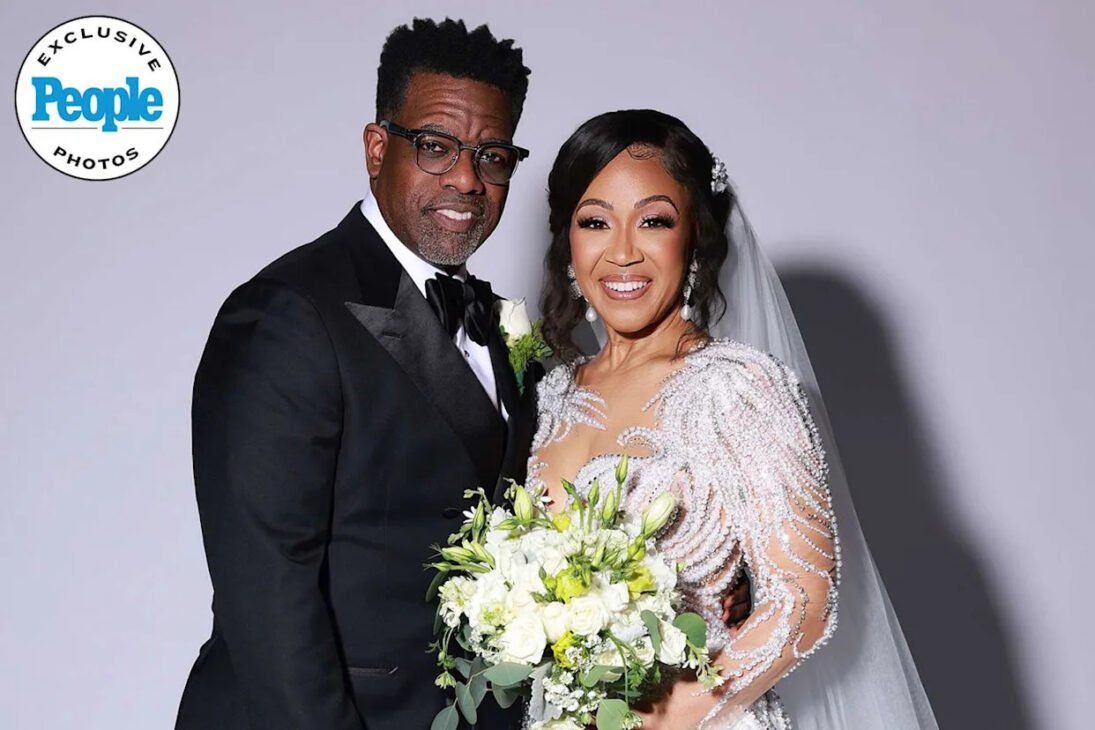
The leaders of Cali Worship got married in 2001 and their wedding was featured on A Wedding Story (who remembers that show?) They have raised three children together, Krista Nicole, Warryn III, and Zaya Monique. Krista is grown now, a Spelman woman, and her younger siblings are coming up behind her. That family was not built in a vacuum and it was not built without scars. The Campbells have been transparent about a season when Warryn was unfaithful, and they did not run from it. They went to therapy. They sat under their bishop. They leaned into other married couples who had walked through fire and stayed. Erica has spoken publicly about the line that became a turning point for them, when she asked Warryn to love her back to her, and he understood that he was being given an assignment that required him to stay at work, not to perform for a season and quietly drift back into old patterns. That is the work. That is what twenty-five years actually costs. It’s sacrifice.
What makes this vow renewal feel so important to me as a Black woman of faith is that it lands in a moment when our community is starving for evidence that marriage can work. I’m tied of headlines about divorce, scandal, and abandonment being the only narrative about Black love that gets oxygen. We need to see Black couples standing. We need to see Black fathers showing up. We need to see Black mothers being adored in public after the babies are grown and the bodies have changed and the careers have stretched everybody thin. The Black family is not a relic. It is a living thing, and when one of ours decides to honor twenty-five years inside a church with their children watching, that is ministry. That is the kind of witness that does not fit into a sermon outline because it preaches itself.
:max_bytes(150000):strip_icc():focal(577x654:579x656)/Erica-Campbell-Warryn-Campbell-Renew-Wedding-Vows-051826-07-fffc6e62e9ff414d9ac14abb099a3894.jpg)
There is also something to say about the timing. Erica’s sister Tina is navigating a divorce from her husband of more than twenty years, and the news has been heavy on the Campbell family. Erica was careful in how she spoke about it, holding space for her sister’s grief while still allowing her own joy to be loud. That is sisterhood the way scripture describes it, where you weep with those who weep and rejoice with those who rejoice in the same breath without canceling either one out. A lot of women, especially Black women, have been taught to shrink our celebrations because someone else is hurting. Erica modeled something different. She honored her sister and she honored her marriage, and she trusted God to hold both.
I keep thinking about what it means that the ceremony happened inside their church. Not on a beach. Not at a destination resort. At the altar where they pastor, in front of the congregation that has been praying for them. Black marriage is covenant work, and covenant is communal. It is held together by the people who refuse to let you quit, who keep showing up to your house, who keep calling your name in their prayers, who keep believing for you when your own faith is thin. The Campbells have been very honest that they did not get to twenty-five years by themselves. They got there because a community of believers and a community of seasoned married couples kept watering the ground underneath them. That is the model. That is what our daughters and our sons need to see.
And Warryn deserves to be named in this too. We talk a lot about the strength of Black women in marriage, and rightly so, but I want to be intentional about honoring a Black husband who did the work to come back to his wife and stay back. He is a producer, a pastor, a father, a man who has built an entire career in an industry that does not protect Black families, and he kept choosing his home. There is a quiet kind of heroism in a man who decides his wife is still the assignment after a quarter century. Our boys need to see that. Our young men need to see that masculinity can look like repentance and presence and faithfulness, not just provision.
For the women reading this, especially the ones who are tired, the ones who have wondered if the marriage they prayed for is actually possible, I want you to look at the photos one more time. Those pictures are not a fairytale. They are the receipt of a couple who decided their covenant was worth more than their comfort. That is what God can do with two people who keep saying yes to each other and yes to Him. Your story can look like that too. It will not look identical, because your assignment is your own, but the same God who held the Campbells is holding our marriages too.
Erica and Warryn have given us a portrait of what honoring covenant looks like, and I do not think it is too dramatic to call it a gift to the Black family.