Behind the Sunglasses: What the Melania Documentary Reveals About Grief, Grace and Getting Dressed
Ya’ll let’s be honest — when the trailer dropped for the Melania documentary, the internet had already made up its mind. Critics sharpened their pens. Social media did what social media does. But somewhere between her oversized black sunglasses and the gold hallways of Mar-a-Lago, something quietly unexpected happened — at least for those willing to look a little closer.
The documentary, now available on Amazon Prime, chronicles the 20 days leading up to Donald Trump’s January 2025 inauguration from Melania’s perspective. Directed by Brett Ratner and acquired by Amazon MGM Studios, the film gives viewers a behind- the-scenes look at the preparations, the fashion fittings, and yes — the very human moments that press coverage often fails to capture.
I watched it. And there is one moment in this film that stopped me in my tracks.
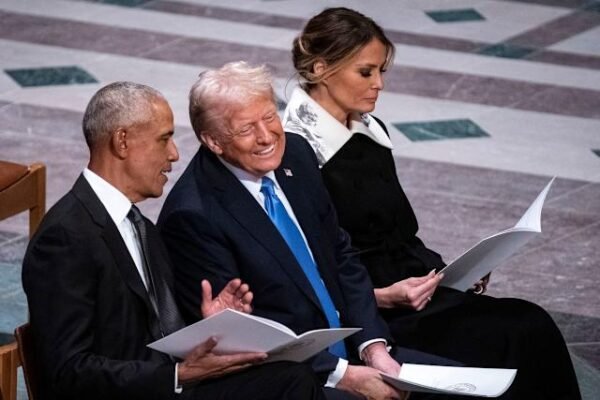
January 9th. The date carries a lot of weight in this documentary, though it passed without fanfare in most reviews. That was the day Melania’s mother, Amalija Knavs, passed away — one year prior. And
by painful coincidence, January 9th, 2025 was also the day of President Jimmy Carter’s state funeral.
Melania showed up. Composed. Poised. Expressionless, some said. The headlines that followed described her as cold, distant, removed. “Stoic,” the coverage called it — and not kindly. What those headlines didn’t know — what the documentary quietly, powerfully reveals — is that she was grieving. Publicly, silently, and with a grace that many of us would struggle to summon on our very best day.
After the funeral, she flew back to New York City that same night. Not to rest. Not to retreat to the comfort of Trump Tower. She went to St. Paul’s Cathedral — to honor her mother. To pray. To grieve on her own terms, in her own space, away from cameras and commentary.
That is not the behavior of a woman who doesn’t feel. That is the behavior of a woman who feels deeply — and has simply learned to carry it differently.
FASHION AS ARMOR & AS A LANGUAGE
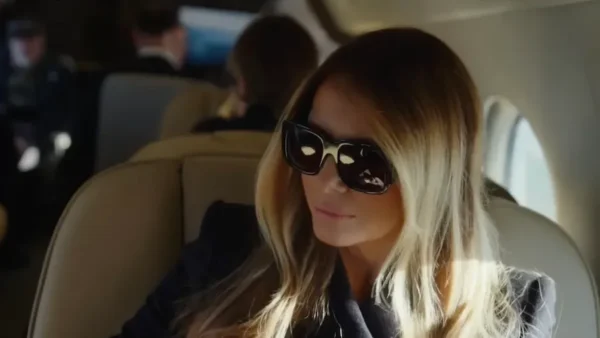
If you’ve seen the trailer, you already know — those sunglasses are practically a co-star. Melania wears her oversized black frames throughout the film: in elevators, on private jets, striding across tarmacs, even pausing to put them on while looking in a gilded mirror. The internet has had a field day.
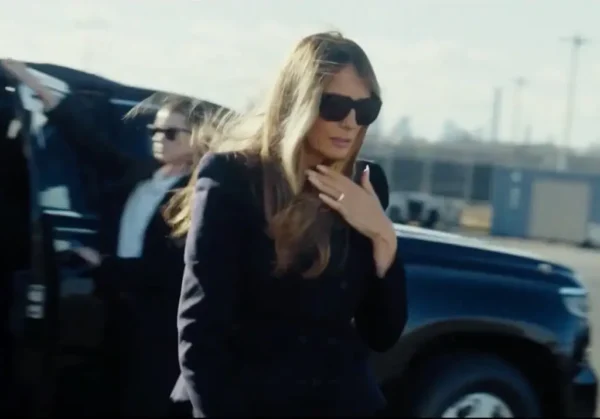
But here’s what I see when I watch those scenes: a woman who understands fashion as communication. As someone who has long admired Jackie Kennedy’s ability to say everything without saying anything at all, I recognize the language. The sunglasses aren’t a wall — they’re a statement. I am here. I am composed. And what I feel is mine.
The documentary spends considerable time inside Melania’s world of fashion — fittings with her personal stylist Hervé Pierre, who designed her iconic inauguration ball gown, and sessions with designer Adam Lippes, who created her navy inaugural ceremony coat. We see her scrutinizing details, offering precise notes, demanding excellence. She knows exactly what she wants and why.
Her go-to sunglass aesthetic — oversized, dramatic, darkly glamorous — draws from her go to designers like Gucci, Saint Laurent, and most recently Christian Dior. The frames are bold by design. And for a woman who narrates her own story almost entirely through the visual, that choice is never accidental.
WHAT THE FILM ACTUALLY GIVE US
Critics weren’t wrong that Melania is a carefully curated film. Melania retained editorial control throughout production, and it shows. This is not a warts-and-all expose. But I’d argue that’s not what’s most interesting about it. What the film gives us — if we’re watching with open eyes — is a woman navigating enormous public pressure while carrying private grief. We see her at Jimmy Carter’s
funeral on the anniversary of her mother’s death. We see her slip away afterward to honor that loss in quiet and prayer. We see her in fittings and phone calls with First Lady Brigitte Macron. We see a drawer at Mar-a-Lago dedicated entirely to sunglasses (iconic, truly).
And we hear her talk about her mother’s influence on her love of fashion and beauty,
and how much she misses her.
That, for me, is the through-line. Not politics. Not pomp. But a daughter who lost her
mother and still had to show up — and did.